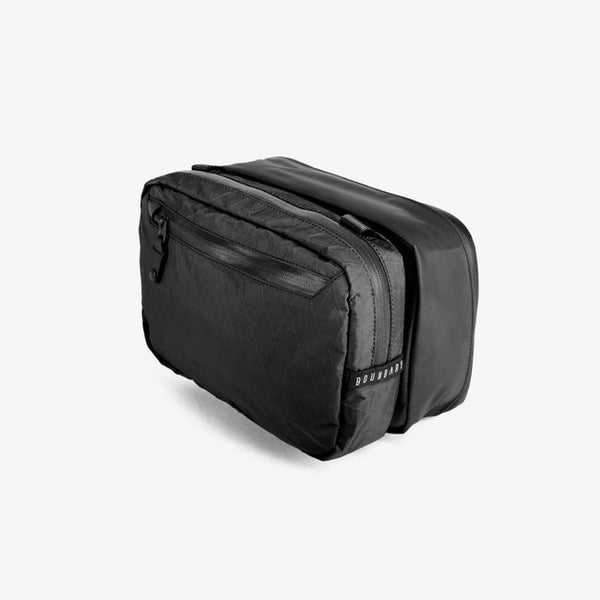
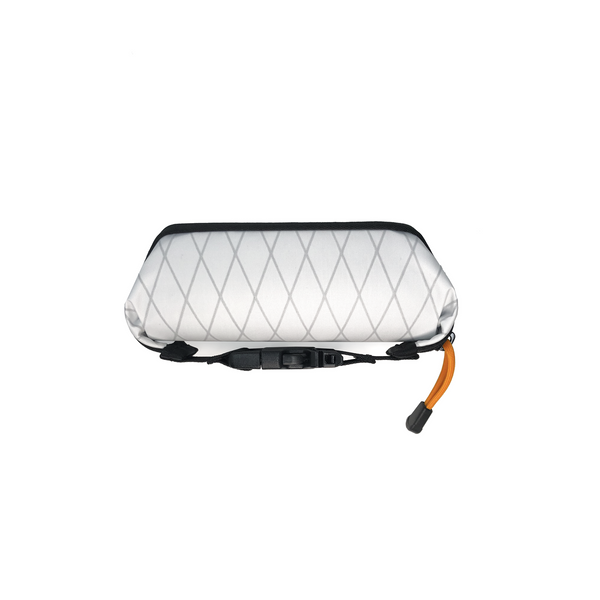
If you've ever picked a bag off our wall, chances are you've held X-Pac. It's on a good chunk of what we carry, from Boundary Supply to Evergoods to Rework, and "what is this stuff?" is one of the questions we hear most at the counter. We first wrote about it in 2023. A lot has changed since, so we started this one over. Updated November 2026.
So, what is it?
X-Pac is a laminated fabric made by Dimension-Polyant, which started out making sailcloth and is now the biggest sailcloth producer in the world. Most bag fabrics are a single woven sheet. X-Pac is several layers pressed and bonded into one: a tough woven face on the outside, a grid of reinforcing fibers under it, a waterproof film in the middle, and on most versions a thin lining on the back.
The result is light and holds its shape, and water doesn't get through the fabric itself. That diamond pattern you see on most X-Pac bags is the reinforcing grid showing through. It's there for strength, and the fact that it looks good is a bonus.
From sails to backpacks
The sailing roots explain most of what makes X-Pac good. A sail has to stay light and keep its shape while it's soaked, pulled tight and sitting in the sun for hours on end. Once you've figured that out, a backpack isn't much of a stretch. Most X-Pac is made at Dimension-Polyant's mill in Putnam, Connecticut, and the company also produces it in Kempen, Germany.

The layers, pulled apart.
What's in the layers
Take a four-layer version, the ones whose names start with VX. On the outside is the face fabric, the nylon or polyester you actually touch and the part that takes the scrapes. Under that is X-Ply, the diamond grid. It keeps a small tear from running into a big one, and it stops the fabric from stretching when you load the bag up.
Next is the waterproof film. That's what actually keeps water out, and it's why X-Pac feels a little crisp in your hand. Last is a thin taffeta lining that gives the stitching something to grip and makes the inside of the bag feel finished.
Three-layer versions like X50 skip the lining. They come out a bit lighter and a bit more flexible.
Reading the tag
Back in 2019, our What Makes or Breaks a Bag piece on fabric brought up names like VX21 and said only that "these indicate the strength or density of the materials." Here's the rest of it. The letters tell you how the fabric is built. The number is the denier of the face yarn divided by ten, so VX21 is a four-layer fabric with a 210-denier face, and VX42 is the same build at 420.
| VX21 | Four layers, 210D nylon face. The most popular pack fabric out there, and a good balance of weight and toughness. |
| VX42 | Four layers, 420D face. Heavier, and usually used on bottoms and other high-wear spots. |
| X50 | Three layers, 500D face, no lining. Rugged on the outside and more flexible. |
| RX15 / RX30 / RX36 | The recycled line, with a face made entirely of recycled polyester from plastic bottles. |
| VX21 Ocean Edition | VX21 with a face woven from recycled fishing nets. |
For everyday bags you'll mostly see VX21, sometimes with a heavier VX42 bottom. That's the panel that ends up on sidewalks and subway floors, so it makes sense to beef it up.

Is it waterproof?
The fabric is. Your bag probably isn't, and that's not a knock on X-Pac. Every seam is a line of needle holes and every zipper is a gap, so unless a bag has taped seams and sealed zips, water will find its way in if you leave it out in the rain long enough.
For everyday city rain, though, it's hard to beat. Walk ten blocks to the train in a downpour and the panels won't soak through or get heavy the way canvas does. If you're carrying a laptop through a real storm, put it in a sleeve and you're fine. Our NYC Commute Kit covers the rest of a rainy-day setup.
How it holds up
This is where I can speak for myself. My own X-Pac bags still look close to new. They go out every day and come on every trip, and the fabric has kept its shape the whole time. (If you're curious what goes in them when I travel, that's in How We Pack.)
Give it enough years and you might see some light creasing, or the diamond grid showing through a little more on certain colors. That's all cosmetic. The thing to actually watch for is delamination, where the layers start to separate, and that almost always comes down to heat or rough washing.
X-Pac, Ultra, ECOPAK or Cordura?
People usually ask this one while holding two bags at once. Ultra, from Challenge Sailcloth, is the other big laminate right now. It's built on UHMWPE fibers, so it's lighter for its strength and tougher against abrasion, and it costs more. We have both on the wall, and a proper Ultra vs. X-Pac Material Lab is coming soon.
ECOPAK is a laminate made with recycled materials and without PFCs. We went deep on it in ECOPAK: An Environmentally Friendly Alternative to X-Pac. Cordura is a different animal altogether: a woven nylon, not a laminate. It's softer and quieter, it drapes more like a regular fabric, and on its own it's water-resistant rather than waterproof. Our piece on Cordura's RE/COR RN66 gets into that one. If you've seen Dyneema on a spec sheet and wondered where it fits in, we covered that in What is Dyneema?
If you want something light and structured that handles rain without paying top dollar, go X-Pac. If you want the lightest and toughest you can get, Ultra is worth the extra cost. And if you'd rather have a softer bag with a more classic feel, look at Cordura. For a good example of X-Pac in a small everyday bag, check out our Boundary Supply Errant Sling review.
Sustainability
Dimension-Polyant's RX line uses a face fabric made entirely from recycled plastic bottles collected in the U.S., and the newer VX21 Ocean Edition is woven from old fishing nets. The company says its Putnam mill and its RX fabrics are climate neutral.
The way we see it, though, the most sustainable bag is the one you don't have to replace. One good X-Pac pack that lasts ten years beats a string of cheaper ones that don't.
Taking care of it
The good news is that X-Pac doesn't ask for much. When it gets dirty, a soft brush or a damp cloth with a little mild soap does the job. Keep it out of the washing machine and the dryer completely, because heat and tumbling are the two things most likely to pull the layers apart.
After a wet day, open every pocket and let it air dry before you put it away. Try not to leave it crushed flat at the bottom of a closet for months, either. And if you get a small nick, patch it early with something like Tenacious Tape before it has a chance to grow.
Quick questions
Is X-Pac better than Cordura? Not better, just different. X-Pac is lighter and keeps water out. Cordura is softer and more forgiving.
Why does my X-Pac bag feel stiff? That's the film layer. It loosens up a bit as you use it.
Can it go in the washing machine? We wouldn't. Spot clean it and let it air dry.
Does X-Pac rip? It's tough to tear, since the X-Ply grid stops a tear from spreading. A sharp edge can still puncture it, the same as any fabric.
How long will it last? Years of daily use, as long as you keep it away from the washer and dryer. Ours are still going.
X-Pac on our shelves
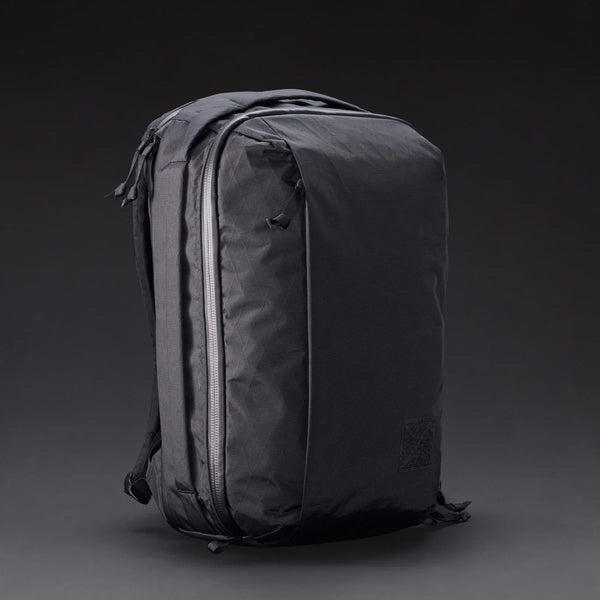
| Everyday backpack | Evergoods Civic Panel Loader (X-Pac Edition) |
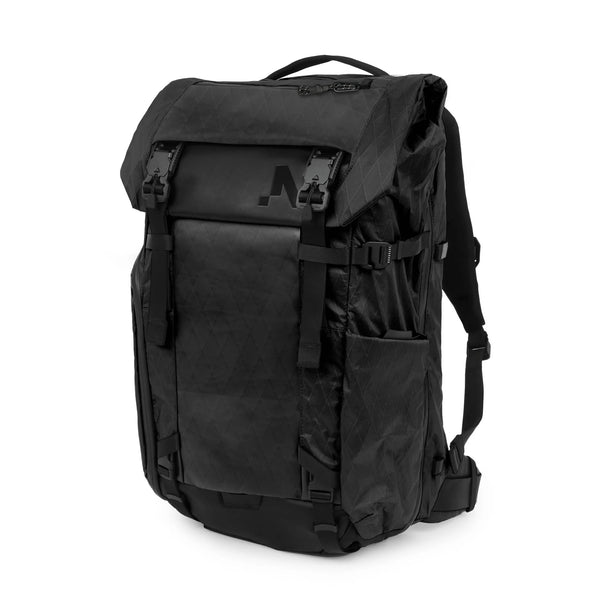
| Big carry | Boundary Supply Errant Pro Backpack X-Pac |
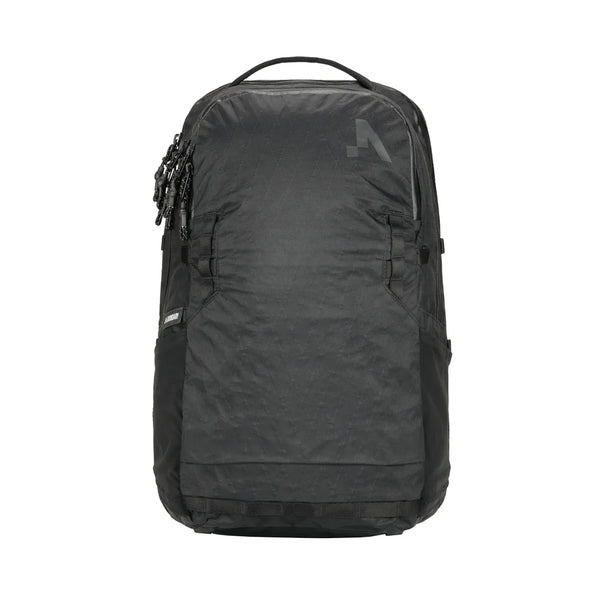
| Commuter pack | Boundary Supply Rennen Pro X-Pac |
| Sling | Rework Toshi Sling 5L V2 (X-Pac Edition) |
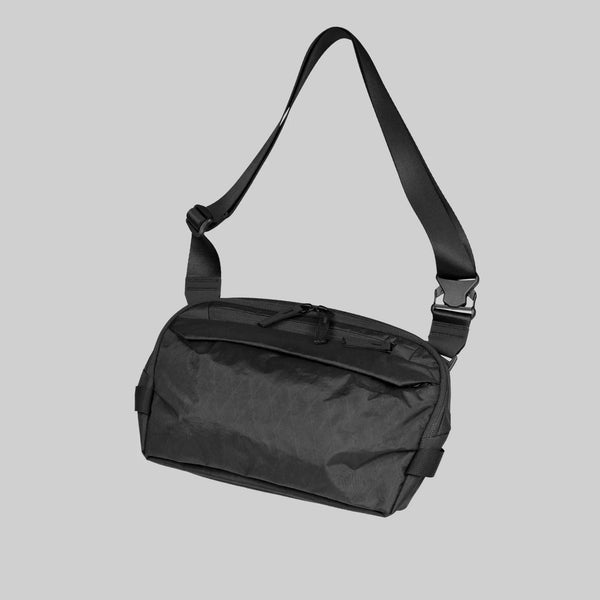
| Small stuff | Boundary Supply Port Kitt X-Pac |
| Sunglasses case | SAMPLE by Dan Matsuda Article 145, VX21 White |
Better yet, come by the shop at 67 West St, pick up a VX21 bag and an Ultra bag, and hold them side by side. You'll feel the difference right away.
Ed, UrbanCred